I have some pretty freakin' cool friends, I have to say. One of my many cool friends, Travis, whom I met while in grad school, also happens to have a supremely cool job. This job allows him to travel to parts of the world that most could not identify on a map, but happen to have extensive culinary and cultural histories. Having just gotten back from one such place, Tashkent (the capital of Uzbekistan), Travis wrote me a great long email telling me about all the food he ate while on his trip, pictures included. I was captivated. In addition to being totally cool and having an awesome job, Travis is also an eloquent and engaging writer. I asked his permission to repost his email here in the form of a guest post because a) it's wonderfully well-written and b) no one knows where Uzbekistan is, much less what is eaten there. I think this post will serve as education along with fascination. So without further ado - a cool post from a cool person with a cool job. Feel free to envy Travis (and me, for being his friend). Thank you, Travis!
---
I returned from Uzbekistan last night. I am struggling with the jet lag, so I thought I would waste some time by sending you pictures and descriptions of a few of the dishes I had while in Tashkent.
First of all, I did eat a significant portion of my meals at small, street side cafes and chaikhanas (teahouses). Most of the food at these establishments is everyday Uzbek or regional fare but still tasty...and definitely cheaper than eating at larger restaurants and hotel chains. I would also argue that because of the turnover rate and hot soups, it is probably a little more sanitary as well.
I did eat plov on several occasions, but did not have my camera with me at those times... so the disappointment is no pictures of plov. Tashkent plov is a heavy affair... laden with mutton and sheep tail fat (the locals contend that several cups of green tea after the meal help the passage of all this fat through the system... call me not convinced). On top of the mutton is the ubiquitous slices of horse meat. Depending upon where you eat it, there is typically a boiled egg or two included (chicken or quail). At one place, they had apricots in the rice, which was quite nice. In Tashkent, the plov isn't an aromatic dish like you would expect from related South Asian rice dishes. The rice isn't as good as jasmine or basmati like in neighboring countries to the West and South.
OK, on to the dishes that do have photographic evidence. First, there are two main soups in Uzbekistan that you can get at just about any cafe or chaikhana: laghman and shurpa. Laghman has large noodles (think udon) in a spicy broth with large chunks of garlic, green beans, onions, and mutton. The actual contents vary from establishment to establishment and from day to day depending upon what fresh vegetables are available that day. Like most dishes in Uzbekistan, it is eaten with "non" (yep, very similar to the Hindi word naan for bread...but this bread is leavened). Shurpa is a little different than laghman in ingredients, but the broth is somewhat similar. Shurpa consists of root vegetable (potatoes, turnips, carrots, etc), onions, and, again, mutton (usually on the bone).

I also had a very common Kazakh dish called Besh Barmak (literally "five fingers" as it was traditionally eaten with the hands). It is a heavy dish consisting of diced horse meat and boiled noodles. Think of it as a horse stroganoff without the sour cream and mushrooms. Because the dish can get dry, it is generally also served with a steaming bowl of what can only be described as "horse consomme." If you are wondering about the flavor of horse just let me say it is somewhat "gamey" and very reminiscent of how the actual animal smells.
When the horse broth was being brought to the table before the main plate, the waitress was about eight feet away and I thought to myself, "yep, that definitely smells like horse." The odor completely filled your nose with a deep, musky animal scent. It was overwhelming. Usually on the side is a small container of yogurt that can also be mixed into the dish... thus almost completing the transition to a stroganoff-like dish. Few spices were used on the meat and probably consisted of mostly coriander... which I wasn't really expecting.
I also had the opportunity to eat at a really good Korean restaurant. Now you might be thinking, "what the hell?" when I mention Korean food in Tashkent, but you have to remember that after World War II, Stalin relocated vast numbers of North Koreans to Central Asia. Many of these communities still exist and there are still cultural, familial, and business relations with Korea. I ordered the bi bim bop as you usually cannot go wrong with that in a Korean restaurant. I wasn't disappointed.
Bi bim bop is one of those "some assembly required" Asian dishes that allows you to personalize the dish to your own tastes. In addition to the large, sizzling stone bowl containing the egg, rice, meat, sprouts, and spinach, there was a number of smaller dishes of "salads" (as the wait staff called them) to modify the dish. Central to this was the homemade kimchi. It was very nice, but not overwhelmingly spicy. As you can see in the photo, there were a variety of other salads to either have individually or mix into the bowl. I ate most of them!
I hope you enjoyed the descriptions... feel free to pass them along to anyone that might be interested in Central Asian cuisine... or just interested in novel foods.
P.S. I really hope I matched the correct picture to the description. If I didn't, please correct me Travis!
Monday, October 20, 2008
| [+/-] |
Notes from Uzbekistan |
Sunday, October 12, 2008
| [+/-] |
Yuppie cat nip |

I may whine about Boston every once in a while, but I love it. I love it especially now that I have a car. Riddled with scratches, cracked taillights, and other city kisses though it may be, it’s my connection to the many farms that surround the city. Now that it’s fall harvest season, the farms are kicking into over drive, pulling up millions of varieties of squash (only a slight exaggeration), potatoes, greens, and apples. I took advantage of both the car and the season to visit a farm, in true to type yuppie fashion.
Red Fire Farm, located in a teeny town about an hour and a half west of Boston, hosted a fall harvest festival this last weekend. Farm festivals are like cat nip for yuppies such as myself - interact with the farmers, spend a day outside, eat really good food, pretend to be in touch with nature - it makes for a good day.
The farm stand itself looks like nothing more than a regular house in a neighborhood. Walk through to the back though, past the tables loaded with garlic, squash, and locally produced milk, and the house opens up to fields with the backdrop of stubby mountains, turning leaves, and a quiet calm.

It was so quiet! Almost shocking to someone such as myself, used to the background buzz of the city. The smell all around was wonderful – heavy on cut grass, with slight tinges of natural fertilizer, if you know what I mean. Not in any bad way, but in a way that reminds me that I am never out in nature. Really, never. I am not much of a nature-girl. Which brings me to the mosquitoes.
Never in my life have I seen so many mosquitoes at the same time, at the same place. They swarmed. They conspired against me, I am certain of it. They could tell that I hadn’t been that close to “nature” in years. If it wasn’t for the kindly yuppies sitting next to me who gave me the kind and generous gift of a bug repellent wipe… well, I am not sure I would be sitting here typing now. I would be a giant, pink, itch-filled balloon praying for a swift death. I am itchy still, mind you, I just don’t want to die. Not at all. I keep remembering the evening and it makes me smile.
The harvest feast began with a squash tasting – butternut, carnival, spaghetti, two types of kabocha, and others I had never heard of. All grown on the farm, all cooked till sweet and smooth. It was really interesting to taste the range of flavors in one vegetable. The word squash all of a sudden seemed rather limited.
We made our way to the tables set in the farm fields under a tent, set with a small pumpkin, cider pressed on the farm that morning, and a hard cider donated by a local company. Everything we ate that night, save for the lasagna noodles, was grown on the farm. How incredible is that? The yuppie in me rejoiced. The repressed hippie let out a 'Yippee!'.
The meal began with small (biodegradable) bowls of squash and apple soup made by a local shop.
For the entrée, we were offered a choice of delicata squash stuffed with rice and topped with mozzarella, or a squash lasagna (my choice). The lasagna was stuffed to the brim with sweet and creamy squash, flavored with just a hint of sage and other herbs. The tender whole wheat lasagna noodles were barely perceptible amongst the mounds of squash, but lovely topped with melted fresh mozzarella. 
The mixed greens salad was so crisp and fresh that I was shocked by the crunch. The roasted vegetables had sweet and white potatoes, red and golden beets, eggplant, cauliflower, and bell peppers, oh my. All sweet and packed with flavor, the kind of flavor you don’t get with vegetables that have lined supermarket shelves for an unknown number of days.
As if that wasn’t enough food, there was also home made pumpkin pie with freshly whipped cream. The pie (whole wheat crust) was super smooth and not overly spiced, nutmeg coming to the front. If I had any room in my stomach at all at this point (did I forget to mention the cider donut I had before the squash samples and the rest of the meal? Oh yea, there was a cider donut) I would have tried to whipped cream. As things stood, I barely dragged myself away from the table, stuffed to the brim and reluctant to leave the farm, with its crickets and bugs in the background and nighttime farm smells. Parting shot of the tent on the farm. I was sad to leave, yet excited to get to my cortisone cream.
It could have been the romance of the farm and fresh air, or it could have been the crisp hard cider, but everything tasted so freakin' good. So fresh and alive, made with care by dirty hippie farmers, none older than me and all committed to the cause of local agriculture.
Friday, October 03, 2008
| [+/-] |
Inspired by Bar Food |
 It is rare that I find myself inspired by bar food. Regular, run of the mill, anonymous, non-fancy bar kind of food. Rare, but not unheard of.
I spent a horribly rainy afternoon in an Irish pub by my house, watching a British soccer (oooh, I mean futbol) match, drinking beer (like it’s abnormal to drink beer at 3PM on a Saturday. In a bar. Please.), and snacking on surprisingly good French fries. A lady who was quite obviously a regular at the bar (which is sad in its own right, for a Saturday afternoon) recommended I get a side of curry sauce for the fries, a British tradition I have never quite understood. However, when informed by a haggard-looking bar regular, on a rainy Saturday afternoon, that I should be eating my French fries covered in curry sauce, then that’s what I do.
And you know what? It was pretty good! I have absolutely no idea what was in it, besides copious amounts of cream, I am sure, but it was smooth and slightly sweet, it was perfect for dipping thin, crunchy fries. Not nearly spicy enough, but it never is. Right there, on the spot, facing the onset of tipsiness and autumn, I started to crave curried squash soup.
I couldn’t stop thinking about it for the next few days. I made it the first chance I could, with the autumn squash that has been arriving in my Boston Organics boxes as of late. Smooth and rich, with a bit of a kick and freshness from the herbs, it was autumn, right there, on my table. I am not entirely ready for autumn yet, but it appears I am ready for the food. It’s going to be soups and more soups from now until next June. Good thing I wasn't craving the potato skins. [Shudder].
Curried Squash Soup
1 med acorn squash and 1 med dumpling squash (though you could use one large butternut squash instead – it is fabulous with curry powder - or all acorn, whatever you have)
1 large onion
2 tbsp curry powder
chili powder, to taste
chicken stock or water
handful of fresh cilantro
3 or 4 stalks of green onion
- Preheat onion to 425F
- Cut squash open, quarter, and scoop out the seeds.
- Rub with olive oil, salt and pepper, place cut side down on baking sheet and roast until tender and browned. Try to stop yourself from tearing off all the brown, sweet, crunchy bits and eating them on the spot. You need them to make the soup sweet(er). Let cool and scoop out flesh. Or burn your fingers, if you’re me.
- Chop onion roughly and sautee in olive oil till soft and translucent, about 5 min.
- Sprinkle with curry and chili powders, stir about and allow the spices to toast for a few minutes.
- Add cooked squash, squish it a bit and stir around till you get bored. Then add chicken stock/water to cover the squash by about an inch.
- Add salt and simmer for about 20-30 minutes.
- Puree and thin out with stock/water to desired consistency
- Toss in herbs, season with salt and paper.
- Photograph aggressively.
- Eat on couch, blanket on lap.
Monday, September 22, 2008
| [+/-] |
Chicken soup for the rhinovirus-ridden |
 It’s totally and completely sad (well, a little sad) that I, at almost 30 years old, call my mother for sympathy every time I get sick. I just have to. I feel like my Mom validates my illness, somehow. Until my Mom feels sorry for me, I am just whiny and annoying. After she tells me “Ooooohhh, you poor thing…,” all of a sudden I am sick, a patient in need of care and attention, completely justified in my whimpers and whines and validated in my illness.
So, if you haven't guessed, I have a cold (or a rhinovirus infection, as we science geeks like to refer to it). I spent the weekend in abject misery, swallowing handfuls of decongestants, which are worth less than their candy coating, as far as my sinuses are concerned. I was preparing myself for a slow and painful death by starvation and neglect (I get dramatic when I am sick) when the man-friend (did we decide to call him the Texan? Yes, let’s shall) swept in with bags of groceries, all set to make me chicken soup. All together now: Aaaawwww.
The soup he made, from America’s Test Kitchen cookbook, may have saved both my life and my mother from 10 more whiny phone calls. The soup was absurdly complex, beginning with a most peculiar recipe for chicken stock.
The recipe starts with a butt ton (technical term here, people) of chicken drumsticks (bones cracked with a cleaver for maximal flavor extraction) which one browns on all sides, in batches in a Dutch oven. The chicken is then allowed to sweat until it releases juices, a step which the cookbook says greatly decreases the simmering time necessary for full flavoring of the stock. After sweating, water is added and the chicken is simmered with bay leaf and sautéed onions. A little less than sixty minutes from the start of this lengthy procedure, the stock is strained and then, and only then, can one start on the soup.
Into the strained stock went big chunks of carrot, celery, onion, shredded chicken, dried thyme, an ear of corn, three handfuls of orzo pasta, and fresh parsley at the very end. Et voila, the most beautiful bowl of chicken soup my rhinovirus-dimmed eyes had ever seen:
The resulting soup was very rich - all the collagen from the chicken drumsticks made the broth thick and velvety. The soup actually set into aspic after a night in the fridge! The chicken itself was moist and flavorful, not rubbery and dead like all chicken coming out of a long-simmering broth. The vegetables though, the vegetables were the best part. The corn absorbed the copious amounts of chicken fat and became the softest, creamiest corn of all time, all while still retaining the snap of the individual kernels. It was divine.
I suspect the soup tastes best when someone makes it for you, unprompted and unselfishly, all the while you blow your nose loudly and whimper about how you are going to die imminently. Have someone make this soup for you next time you are sick. I am pretty sure you will feel better right away. Or at least you will feel your illness has been validated and you are being taken care of.
P.S. The recipe for this whole business is way too long for me to retype and really isn’t the point of this post, which is my feeling sick and whiny. So I won’t type it. Instead, I am going to sit on my couch and swallow more useless decongestants.
Saturday, November 25, 2006
| [+/-] |
The Devil's Own |
 This year marked my first Thanksgiving without my family. I celebrated instead with good friends and many bottles of wine. Well, I guess the wine remained a constant, even if the company did not. I was very excited about the meal I would prepare and was looking forward to it for days. Everything was in its place in my head, everything was planned and made perfect sense. Not surprisingly, that didn’t last long. Some things didn’t turn out as well as I had hoped, some things didn’t turn out at all, but in the end all was well. The evening was great fun, due in no small part to the fact that Lisa (savior) had prepared half the dinner.
Now, for my part of the meal – the part I am not too embarrassed to discuss, that is.
I was making a butternut squash and apple soup* that was to be garnished with roasted chestnuts after being pushed through a fine mesh sieve - exhausting but worth it. The chestnuts were a new experience for me. I think I have had them just once before – they are not a part of my everyday eating vocabulary. To me, they seem to be a cross between a nut and a potato - slightly mealy, a little nutty, definitely starchy. Very much unlike anything else I have had. I had to learn as I went along.
And this is what I learned that fateful Wednesday before Thanksgiving: chestnuts are the devil’s instrument. Our prison system can be completely revamped by making convicts peel chestnuts instead of doing time. It is a punishment far more horrible and one sure to warn off a relapse of criminal activity. Kids should never be grounded – they should just be forced to peel a pound of chestnuts. They will be guaranteed never to stay out too late or get bad grades again. Brilliant plan, isn’t it! So yeah, I peeled a few chestnuts this Thanksgiving.
I could have bought the chestnuts peeled and ready. But no, I wanted to do things the right (read: hard) way, starting with actual chestnuts. Everything I read about preparing chestnuts made it sound rather easy, nothing too sinister. Score the shell before roasting in the oven and peel the nuts while still warm. Ok. But then came the problem – the stupid shell and underlying tough skin just. would. not. come. off. It was horrible. After getting a couple of cuts on my fingers, running out of curse words, and opening a beer, I tried blanching the nuts in hopes of loosening the shell and skin.
This is when I figured out that when they said “peel while still warm,” they actually meant “while burning, searing, boiling hot straight out of the water.” That was the only way I could get the chestnut skin off. If I allowed the chestnuts to sit for even 10 seconds after coming out of the boiling water, the skin would toughen up again. It was truly awful. I am now completely traumatized and am dead set against all things chestnut. It’s like when you are bitten by a dog when you are little and have an aversion and fear of dogs for the rest of your life, except with chestnuts. To give credit where credit is due, at least half of my suffering was worth it – the cornbread, sausage, and chestnut stuffing that Lisa made was ridiculously good, and the smoothness of the soup I made was nicely offset by the meaty chestnut pieces.
To wrap up, please learn from my mistakes – buy the ready chestnuts. There is no glory to be gained by doing it yourself. All that said (or recalled with a shudder, as it were) I had a wonderful Thanksgiving, with friends, tons of food, and completely unfitting conversation for the dinner table. It was great. So great, in fact, that I completely neglected to take pictures of what we were eating! That's too bad.
*Note : I prepared the soup as in the recipe except that I used an actual butternut squash instead of the jarred nonsense - why go the easy route? It actually worked out really well - I roasted a butternut squash at 450 till it was caramelized and soft (~45 minutes), choped the flesh and added 4 cups to the soup. Better than jarred, I think. Pushing the soup through a fine mesh sieve after blending it seems like yet another form of torture but it was totally worth it for a special occasion - I have never made a soup that smooth. This is not a technique to bust out on a regular Wednesday night.
Saturday, November 11, 2006
| [+/-] |
How To Ruin A Manicure in A Few Easy Steps |
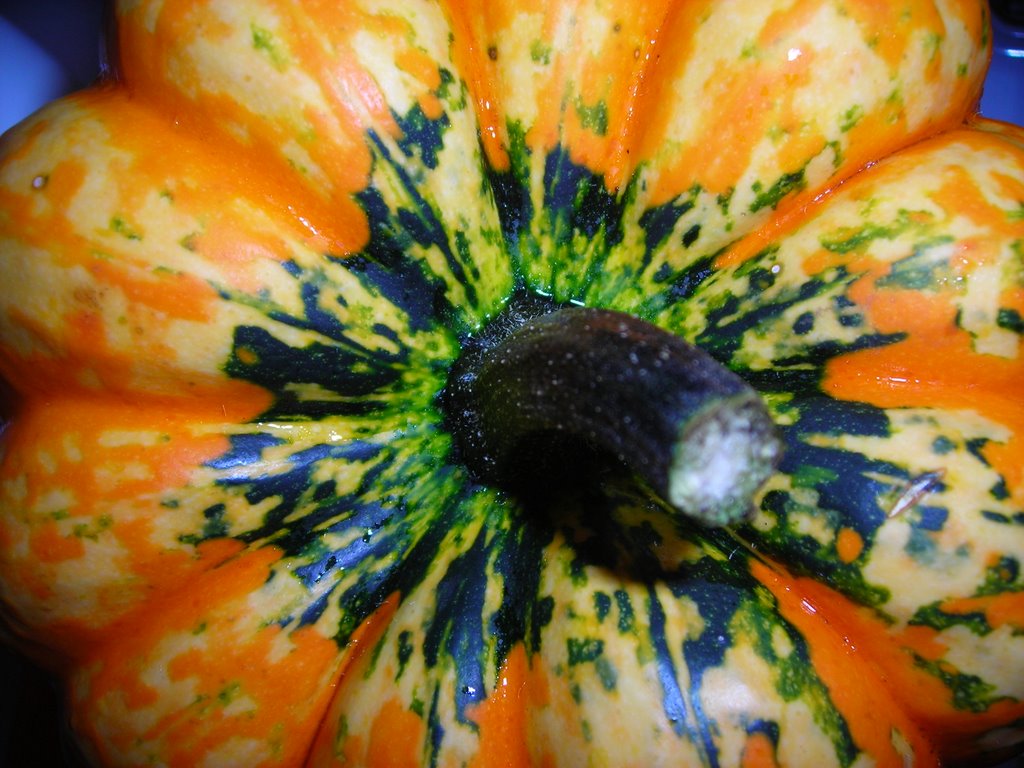 I took the day off! I only went into lab for a few minutes. I used the day to put my life back together – it’s remarkable how errands (and dirty clothes) pile up when you’re never home. One of my most important errands of the day? Oh yes, getting my nails done. This happens about every 6 months and is just about the greatest thing.
My manicures have a very limited life span – if the the gloves in lab don't do them in, cooking does. The kitchen is a varnished nail’s worst nightmare. Sharp knives wait around to take a chunk out, dirty dishes lay around the sink aiming to dull the shine, bits of food climb underneath to make me look (if not act) like a ten year old boy.
After along nap (manicures can be exhausting!) it was time to make dinner. I don’t know if y’all are aware of this, but Boston is cold. Really cold. Big, warm soup is all I can eat once November hits (it does feel like a punch most years). To honor this cold November Saturday, I made a squash and sweet potato soup. Roasting the vegetables helped to warm my kitchen… guess it made the soup taste better too, as a pleasant side effect. My kitchen may have warmed up, but oh how my nails suffered in the process. I somehow managed to drop a piece of turnip into the oven, below the grate at the bottom. I would be lying if I said this was the first time I ever dropped anything in there. Bugger. I had to remove the bottom of the oven to get the turnip bit out and avoid a fire... or at least a nasty smell. This involved me not only locating, but using a screwdriver. Oven, screwdriver, manicure - not words that belong together in a sentence.
The roasting made the squash and sweet potatoes so sweet that the resulting soup scared me a little – it was almost dessert. Crème fraiche did the trick, muting the sweetness with a bit of sour; the thyme made the soup woodsy and rich. Combined with laundry (yet another activity to wreck my nails) and my 5,000th viewing of the first Harry Potter movie, it had a pretty good November Saturday. I am trying to pretend that my love for Oliver Wood is not wrong.
Well-Manicured Squash Soup
1 carnival squash (or any other would work)
2 small sweet potatoes
1 medium onion, chopped
5 large garlic cloves
1 tsp fresh thyme
pinch of cayenne pepper
~4 cups chicken stock
1 tbsp crème fraiche
1) Rub halved squash, potatoes, and unpeeled garlic cloves with olive oil, sprinkle with salt and pepper. Roast at 400F for about 45 minutes, until all are soft (remove garlic early so it doesn’t burn).
2) Peel the roasted garlic cloves, scoop out the squash and potato, chop the flesh – a smart person would have waited for all to cool before attempting this. I did not. Ouch.
3) Sauté onion in olive oil until soft, add the roasted veg and chicken stock. Bring to a boil and add thyme and cayenne. Cook over low heat for about 15 minutes till all the flavors combine.
4) Buzz with immersion blender (my most favorite of all kitchen toys, thanks to the most greatest aunt and uncle of all time) and thin with more chicken stock if you’d like – I prefer my soup on the thick side. Add crème fraiche and reheat.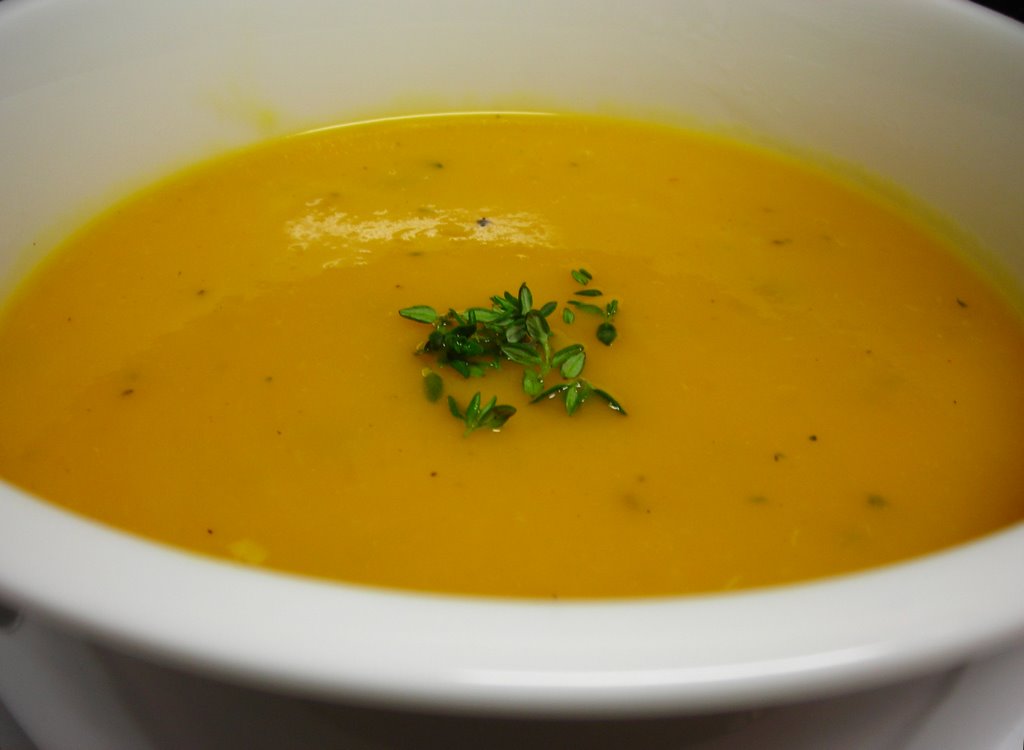
P.S. To allay your fears, my nails made it through. They shall live to see another day.
Saturday, October 07, 2006
| [+/-] |
Mushroom Velvet Soup |
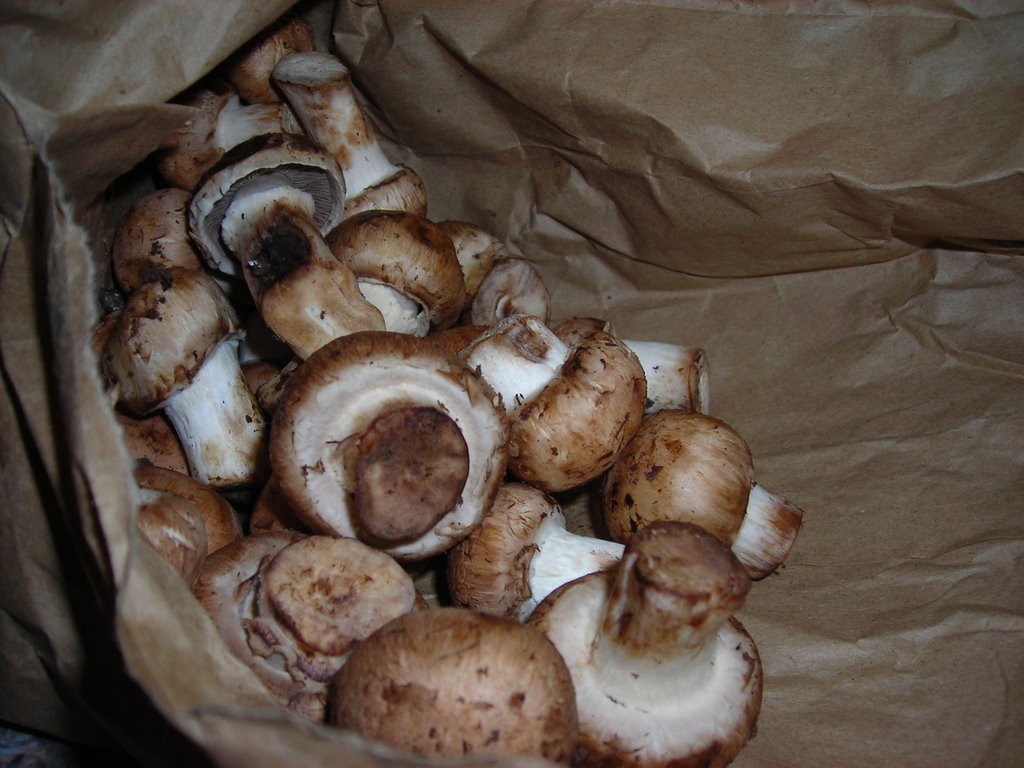
My Mom used to make a mushroom soup when I was little (12ish). The crinkled and crusty piece of paper that had the recipe photocopied on it (from an unidentified source) had the heading “Mushroom Velvet Soup.” This was back in the early nineties, so Mushroom Velvet Soup didn’t sound nearly as tacky as it does now. Actually, it sounded rather sophisticated and involved. The soup had a lot of flavors familiar to me, having spent only a couple years in the country at that point. There was dill and there was sour cream – two staples of Russian cooking. I loved it.
I had absolutely no interest in cooking at that time. In fact, I considered it punishment. This soup, however, really was punishment. Velvet obviously implies something smooth and rich. Unfortunately, a biting box grater and my 12-year-old hands were the closest we came to a food processor or immersion blender in the house. So, the soup making would go a little something like this. My Mom would call from work and ask me to grate the mushrooms before she got home. Yep, grate. Mushrooms. A whole carton of them. I hated every minute of it. I lost a lot of skin to that stupid grater.
After she got home, my Mom would make the soup with my nowhere-close-to-pureed mushrooms. The resulting soup tasted great but was certainly nowhere near velvety – even less velvety on the days when I was an extra cranky 12 year old and didn’t do very well with the aggressive box grater. The soup was one of the first things I learned how to make when I started cooking a little in college. I haven’t made it in years, for obvious grater-related reasons.
This is a slightly more grown version of that soup, made with the advantage of kitchen gadgets I am now privileged to own. I substituted crème fraiche for the sour cream to make the soup rich with a slightly more subtle tang, and used shallots in place of onions to let the mushroom flavor stand on its own a bit more. It was as classy as I remembered it.
Mushroom Velvet Soup, all grown up.
2 tbsp olive oil
2 small shallots, chopped
8 oz. crimini mushrooms, roughly chopped (ha!)
¾ tbsp flour (helps with the velvet part of the soup)
2 cups chicken stock (more if you like a thinner soup)
3 tbsp crème fraiche
big handful of finely chopped dill
1) Saute shallots in olive oil till softened, about 5 minutes. Add mushrooms, salt and pepper, cook until all the water from the mushrooms evaporates.
2) Add the flour to the mushrooms, stir until absorbed. Pour in the stock and bring soup to a boil. Locate the pot lid at the very bottom of your sink that is overflowing with dirty dishes (or is that just me?), wash it, cover pot, lower heat and simmer for about 15 minutes, till the soup thickens and the mushrooms are thoroughly cooked.
3) Buzz the soup with blender (hehe) until smooth.
4) Add crème fraiche and dill, reheat but do not boil. Thin soup with stock if desired. Season with salt and pepper.
Wednesday, September 13, 2006
| [+/-] |
Wallflower Soup |
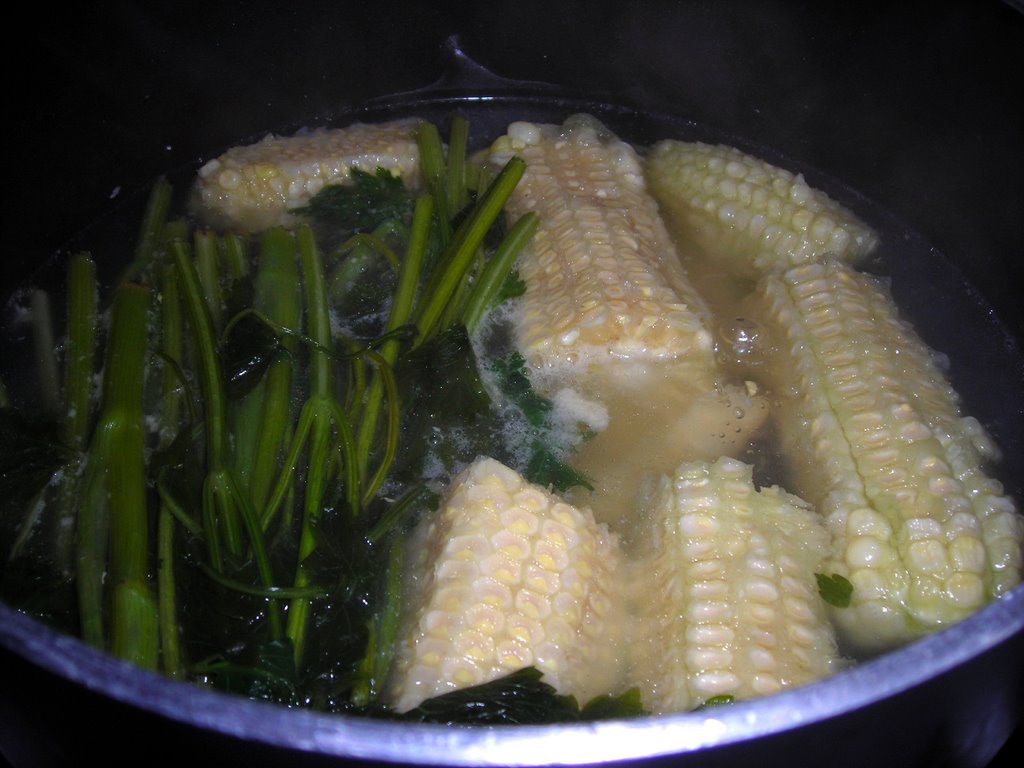 I propose a commentary on our life and society based on my last two markedly contrasting posts. How about this: while an eggplant stack is the high school cheerleader with perfect dimples who is dying to be taken seriously (obvious flash, subtle substance), corn and potato soup is the awkward wallflower at the sock hop who just wants Billie-the-football-player to look over (all substance, desperately lacking flash). An extended metaphor, I know, but an apt one. The soup I made was ugly. It really just was. So, no picture of the final product. To give you an idea, my poor soup bore a striking resemblance to what I would imagine was Oliver Twist’s gruel. If it is any consolation, my soup had a lovely personality - it wasn’t much to look at but I’ll be damned if it didn’t taste good.
This all started as a result of my choosing beer and cheese and crackers for dinner over actually cooking anything for an embarrassing number of days in a row. The sweet corn I received in my Boston Organics box was crying for action and attention -- I had to use it before it quit on me.
Two disparate thoughts came together to generate the idea that would later become my wallflower of a soup. First was the broccoli soup that Clotilde deemed her best ever; the base of the soup was enriched with an aged cheese rind and parsley stems. [This is why I have had a cheese rind and parsley stems in my freezer for the last six months (six months due to the fact that I choose beer and cheese over a real dinner routinely)]. The other idea came from a Boston Globe interview with the chef at Lineage, the somewhat new restaurant that has replaced my beloved Lucy’s on Harvard St. in Coolidge Corner (interesting tidbit – Lucy was Mitzi-the-owner’s dog. Much better name for a restaurant than Mitzi’s).
Using seasonal ingredients is, of course, de rigueur in new Boston restaurants, as well it should be. The soup of the moment at Lineage is a sweet corn soup that is started by sauteing leeks, shallots, and onions, then adding sweet corn, Yukon Gold potatoes, a stock made from corn cobs, chicken stock and some cream to finish. I see a number of problems with executing this recipe in my own, limited, kitchen. For one, do I really need to include every possible form of onion in my soup? No, indeed I do not. Secondly, cream scares me, so I never have any around. I am working on getting over this debilitating phobia of liquid fat, I promise. But a stock made from corn cobs sounded like a pretty neat idea.
I set out to “build” my soup with as much flavor as I could shove into it. I started by making a corn stock with parsley stems, corn cobs, and an aged Gouda rind. [The picture of the stock is there to replace that of the final, unappealing gruel-like soup product]. The smell coming from this pot was unbelievable. While the stock was infusing with corn and cheese, I was chopping onions and garlic (and drinking beer) for the second stage of the soup making. I sautéed the onion and garlic in some olive oil until softened, added corn and potatoes and stirred them about until the potatoes released some starch. I then added the strained stock and let it all bubble contentedly away while I continued on my merry cheese-eating way.
Once the potatoes were tender, I pureed the soup with my stick blender, which I still get a dorky thrill from using. It was at this point that I realized my soup was going to have a difficult life ahead of it. The other kids were not going to play with it. It looked plain and slightly consumptive: a pale, chunky puree. But I still loved it, as any mother would.
Upon tasting my outcast of a soup, I was surprised to find it lacking the depth of flavor I would expect from a soup infused with cheese. It is too bad I was drinking beer and eating, um, cheese while making the soup – I made the mistake of using water for the base of the soup as opposed to chicken stock. To remedy, I thinned the soup with chicken stock, added more salt, a bit of white pepper and parsley. That did the trick. The chicken broth made the corn flavor stand out and added a roundness to the soup that I was missing. The fresh parsley made the parsley-infused base come forward. And salt is just salt and my life would be incomplete and meaningless without it. [In case there was any doubt of my dork status, I actually keep a baggie of my own salt in lab so that I do not have to stoop to using the iodized craziness that lives in the lab “food” drawer.]
Clotilde was right: the cheese rind and parsley stems gave a great depth of flavor to an otherwise plain soup. I didn’t even miss the other 15 varieties of onion that I was meant to include.
So that is it. That is the story of my ugly soup with soul. So don’t judge. Some things are worth a second look, even if they are wallflowers and you are Billie-the-football-player. Lesson learned?
Corn and Potato Wallflower Soup
parsley stems
Aged cheese rind (any aged cheese, I suppose. I used an aged Gouda rind and a bit of Parmesan rind)
2 cups water
olive oil
2 ears of sweet corn, kernels cut off the cobs
3 baby Yukon Gold potatoes, thinly sliced
½ medium white onion, chopped
3 cloves garlic, chopped
1 cup chicken stock
salt and freshly cracked black pepper
dash of white pepper
1 tbsp fresh chopped parsley leaves
1) Simmer corn cobs, cheese rind, and parsley stems in 2 cups water for about 30 minutes (or until you get really bored of staring at the pot). Strain the stock. [The smarter thing to do here would probably be to make the corn stock in chicken stock instead of water. Either way would work].
2) Sautee onion and garlic in olive oil over medium heat until translucent. Add the corn and potatoes. Cook stirring for about 5 minutes, until the potatoes begin to release some starch. Add the strained stock, season with salt and pepper(s), bring to a boil, lower heat and simmer until the potatoes are tender.
3) Puree the soup with a nifty stick blender (or a regular blender, should you be so unlucky) leaving some texture in the soup – I actually removed some of the corn from the soup prior to blending to leave some kernels whole.
4) Add 1 cup of chicken stock, or as much as will give you your desired soup consistency. Bring to a boil, add parsley, and it’s all done.
Friday, June 09, 2006
| [+/-] |
Caldo Verde |
 I know, I know, I am ruining the order of things. I haven't yet finished the last Sunday Night Dinner recap, and here I am, moving on to something entirely unrelated. But this was exciting for me (likely no one else though). My last Boston Organics box included a bunch of kale.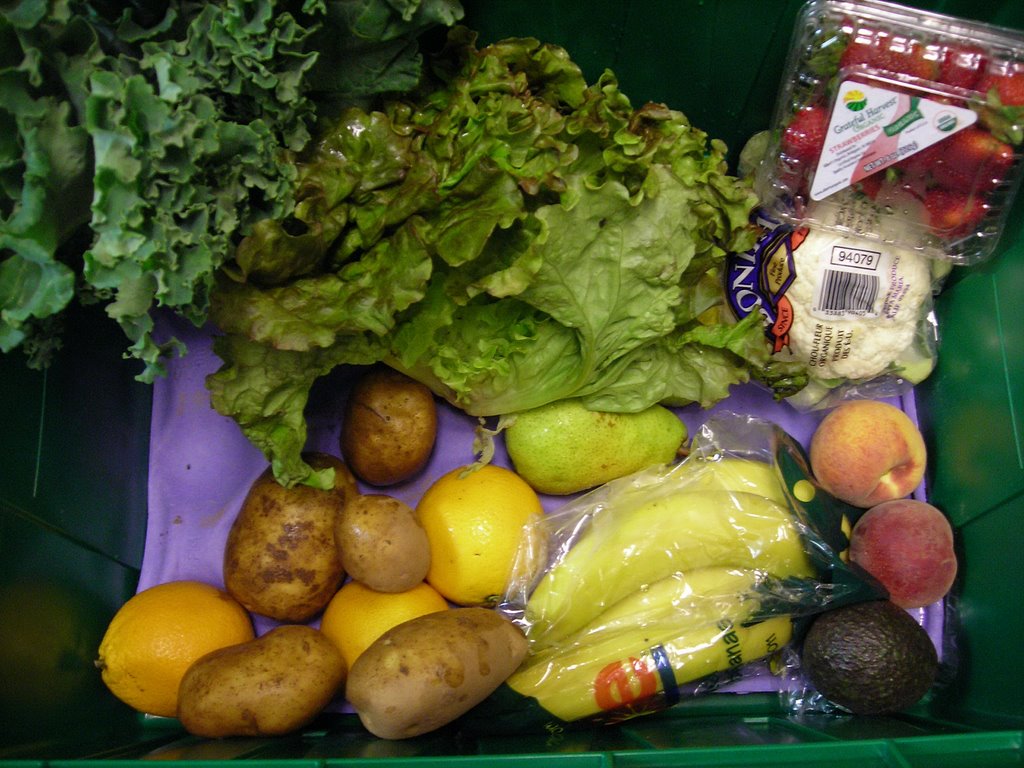
See it? Top left corner, next to the Massachusetts-raised red leaf lettuce, in my somewhat rushed picture of the box. I had not tried kale before - either cooking or eating it, and have always been somewhat weary of it. I conquered that fear tonight, and made Caldo Verde (aka Portuguese Green soup) following a recipe kindly included with my vegetables. I checked, and the recipe looked authentic enough. Unfortunately, I had to leave out the linguica (Portuguese sausage) which is always used in the soup - taunted by pork products yet again. The recipe included in my box said the soup doesn't suffer terribly for the loss.
Caldo Verde is basically a smooth potato soup with kale added at the end of the cooking. Smooth soup means I get to use one of my very favorite kitchen toys - my immersion blender, a birthday gift from my aunt. I didn't mess with the recipe too much, other than leaving out the sausage and using chicken stock in place of water to add more flavor to the soup. The recipe starts by sautéing the onions and garlic, as many soups do. The next step calls for sautéing the raw potatoes. I was puzzled by this until I saw what was happening to the potatoes - cooking the raw potatoes in a dry pot made them begin to release their starch. I could see the starch collecting on the sides of the pot and making the potato slices stick together. Brilliant! Rendering starch out of the potatoes before adding the liquid probably leads to a smoother and creamier soup.
The kale is added at the end as it needs far less time to cook than the potatoes. Kale wasn't as scary as I thought; it was very easy to work with. I cut out the tough stem from each leaf, although I am not sure that was necessary. Was that necessary? I am a kale novice. That goes for all greens, actually. Have to work on that.
The soup turned out well. The potato base was smooth and thick enough to hold the kale afloat (I added only some of the chicken stock at the beginning of the cooking so as to control the thickness of the soup at the end). The kale was tender and tasted fresh as contrasted with the potato base. I think the texture of kale was what initially scared me - I always imagined that a lot of chewing isinvolved with kale, but that wasn't the case at all. It was a lot like spinach in taste, but just a little coarser. I will definitely make this soup again, maybe even with another green of some sort, like chard. If the rain keeps up in Boston, I will be making this soup again very soon. I didn't know that Boston had monsoon season...
1 medium onion, diced
1 clove garlic, minced
1 tbsp olive oil
3 large potatoes, peeled and sliced thinly
salt, white and black pepper, to taste
1 bunch of kale, washed and trimmed
2 quarts chicken stock
1) In a large soup pot over medium high heat, heat the oil.
2) Add the onions and garlic and sauté for 3 minutes.
3) Add the potatoes and sauté for 3 more minutes, stirring constantly (everyone now knows how I love to stir constantly).
4) Add cold chicken stock and bring the soup to a boil. Reduce heat to medium and cover the pot. Simmer for about 15 minutes, or until the potatoes are falling apart.
5) Puree the soup (with a nifty immersion blender, perhaps?) and season with salt and pepper. Return the soup to medium heat and warm.
6) Shred the kale leaves, add them to the soup and simmer for 5 minutes until the leaves are bright green and tender.
Do you see why this kale-containing soup was so exciting for me? I have a new vegetable? leaf? something, to add to my repertoire. I will finish the Sunday Night Dinner post soon. Really, I will.
~AK